
Turn Trade History Into Insight.
See what happened, spot the habits that help or hurt your trading, and turn raw results into rules you can trust.
HAPPENED Review the day without rebuilding it by hand.
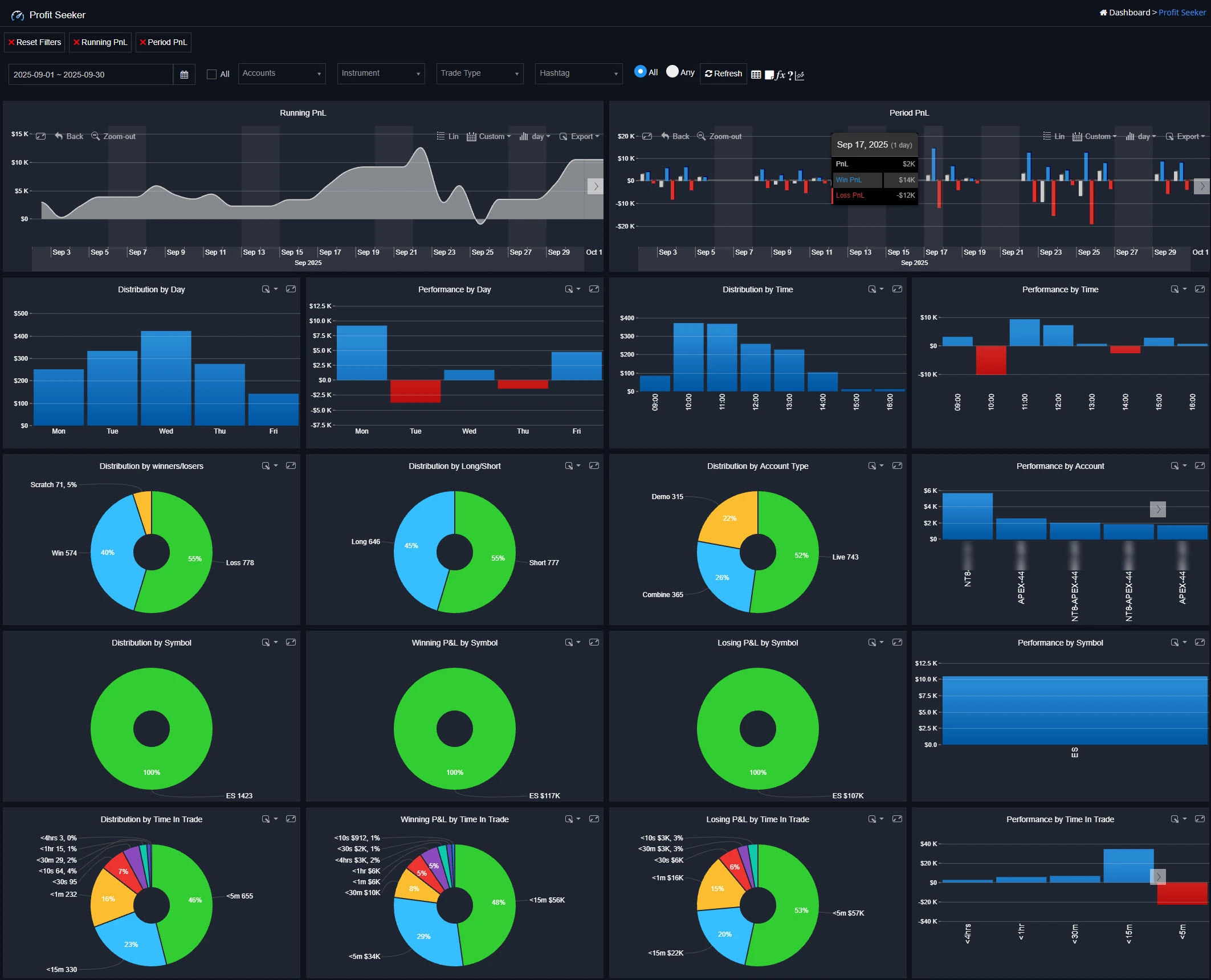
Included with daytradr - Know What Happened Without Rebuilding the Day
Every daytradr user gets the basic Journalytix review layer, so the record of trading is already there: the days traded, the trades taken, the P&L path, basic performance views and a clearer way to look back at results.
Problem
What changes
Benefit
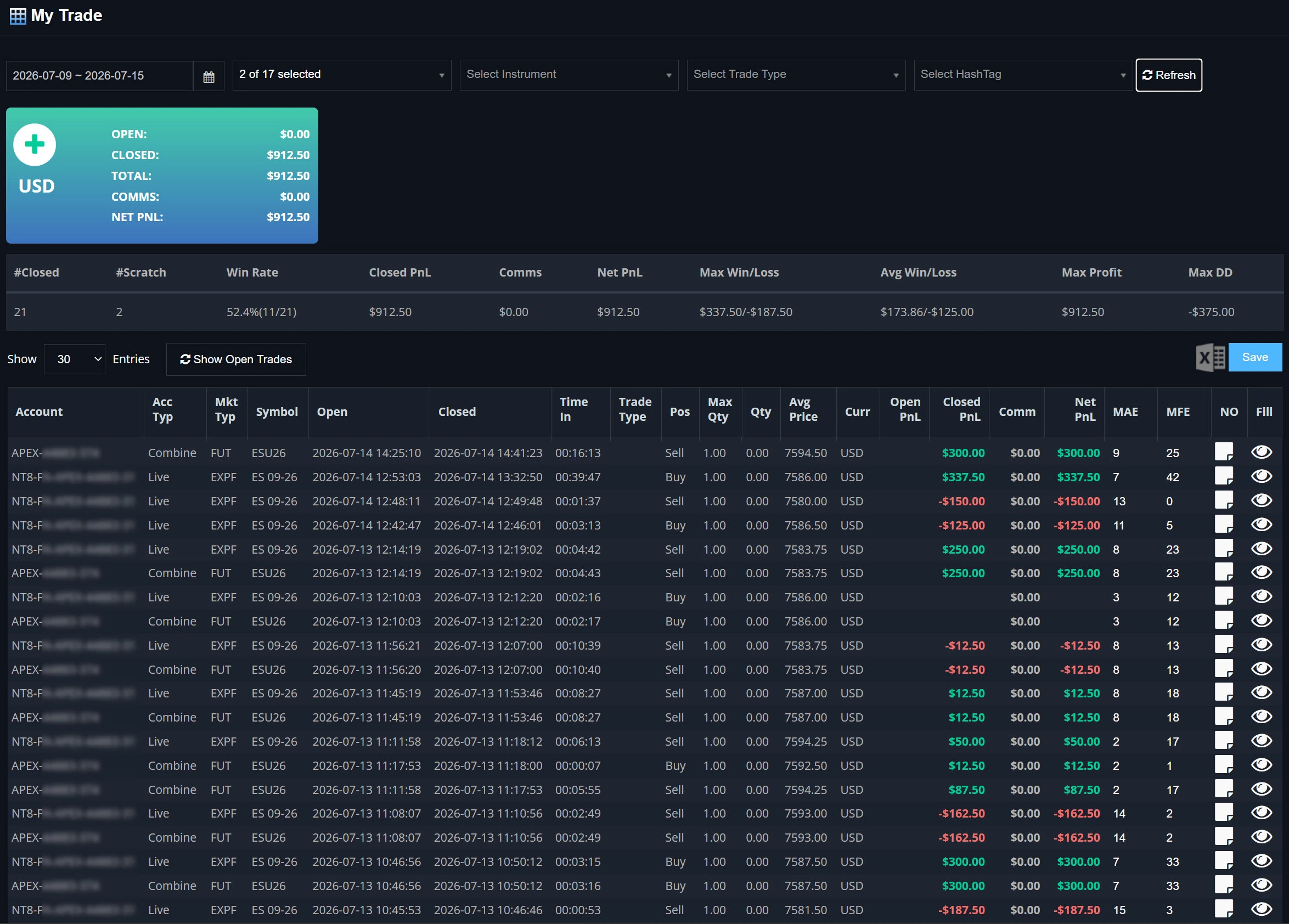
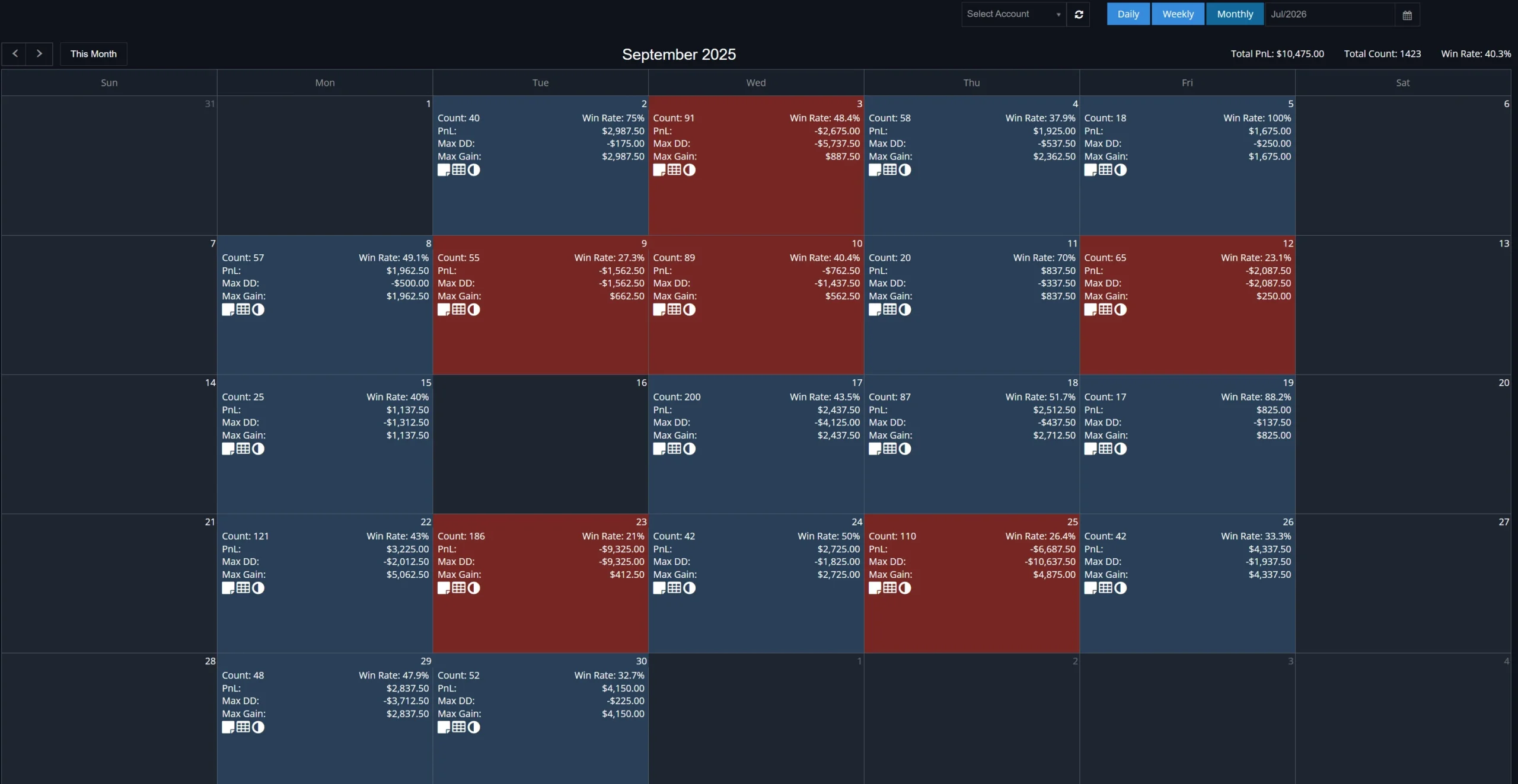
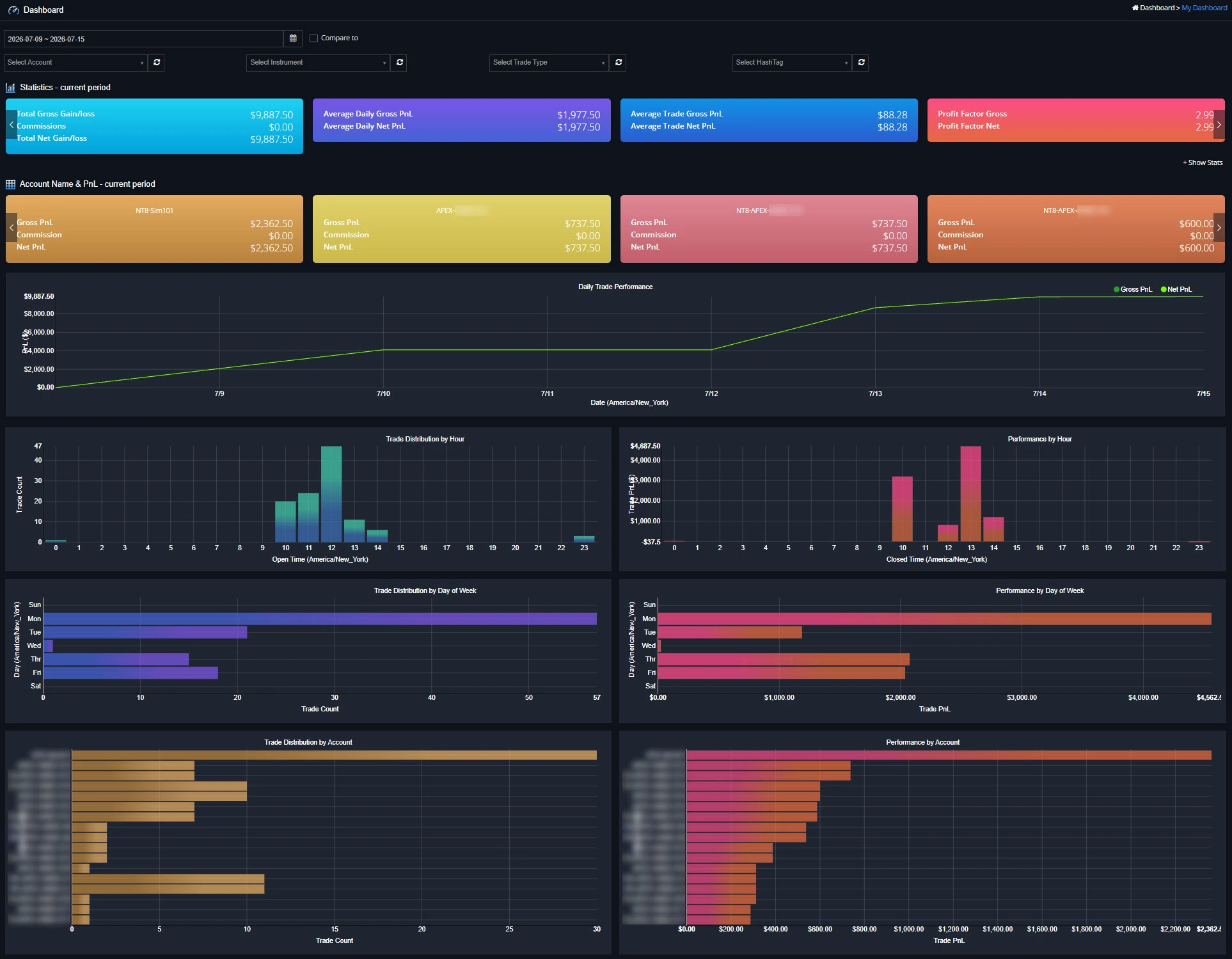
Included with daytradr - Know What Happened Without Rebuilding the Day
Every daytradr user gets the basic Journalytix review layer, so the record of trading is already there: the days traded, the trades taken, the P&L path, basic performance views and a clearer way to look back at results.
Problem
What changes
Benefit
Active Trader Advanced Analytics /
Turn Results Into Rules You Can Trust
That is what the Active Trader version adds. It turns Journalytix from a record of trades into a full review workflow.
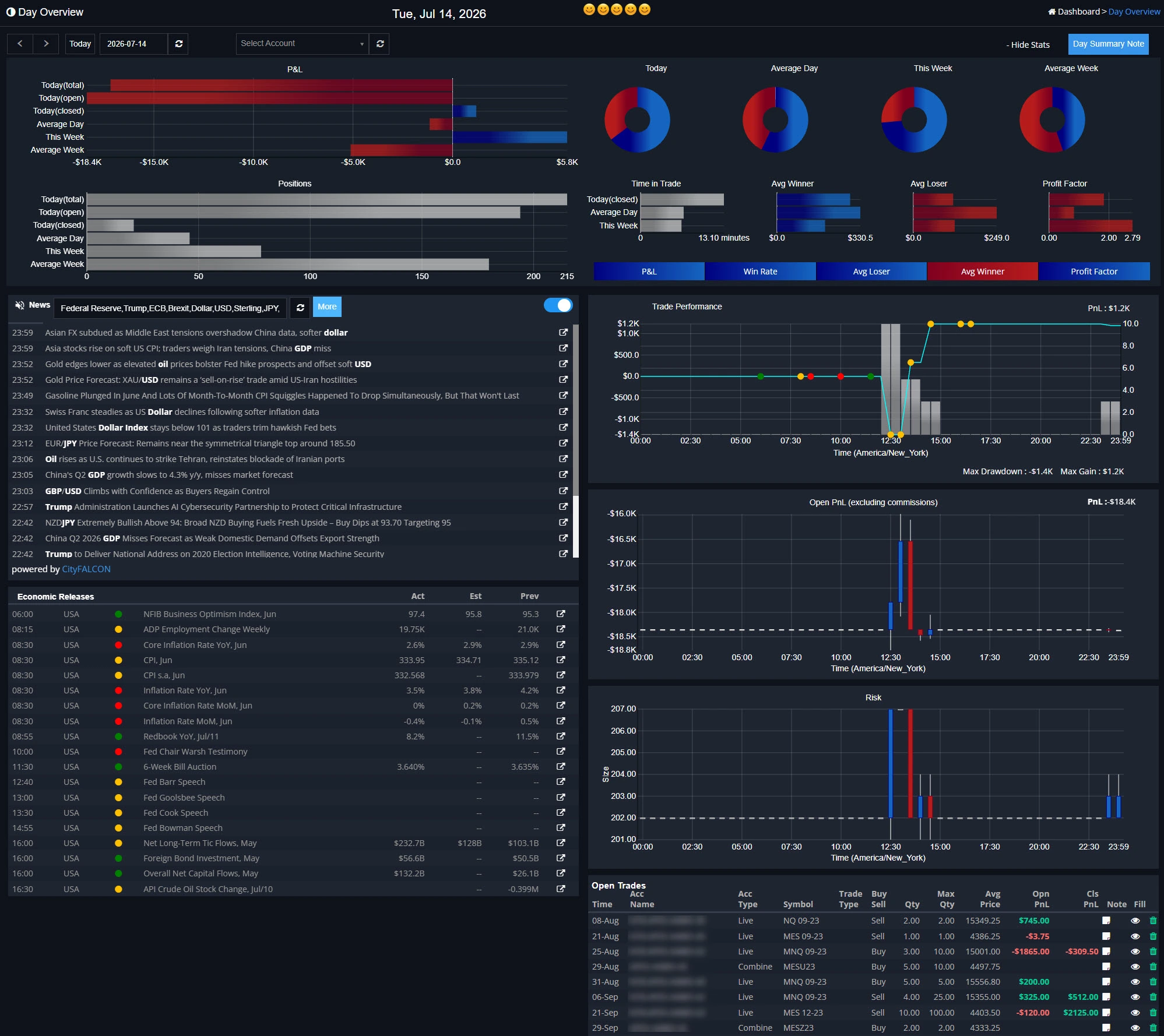
Trade with the day in view
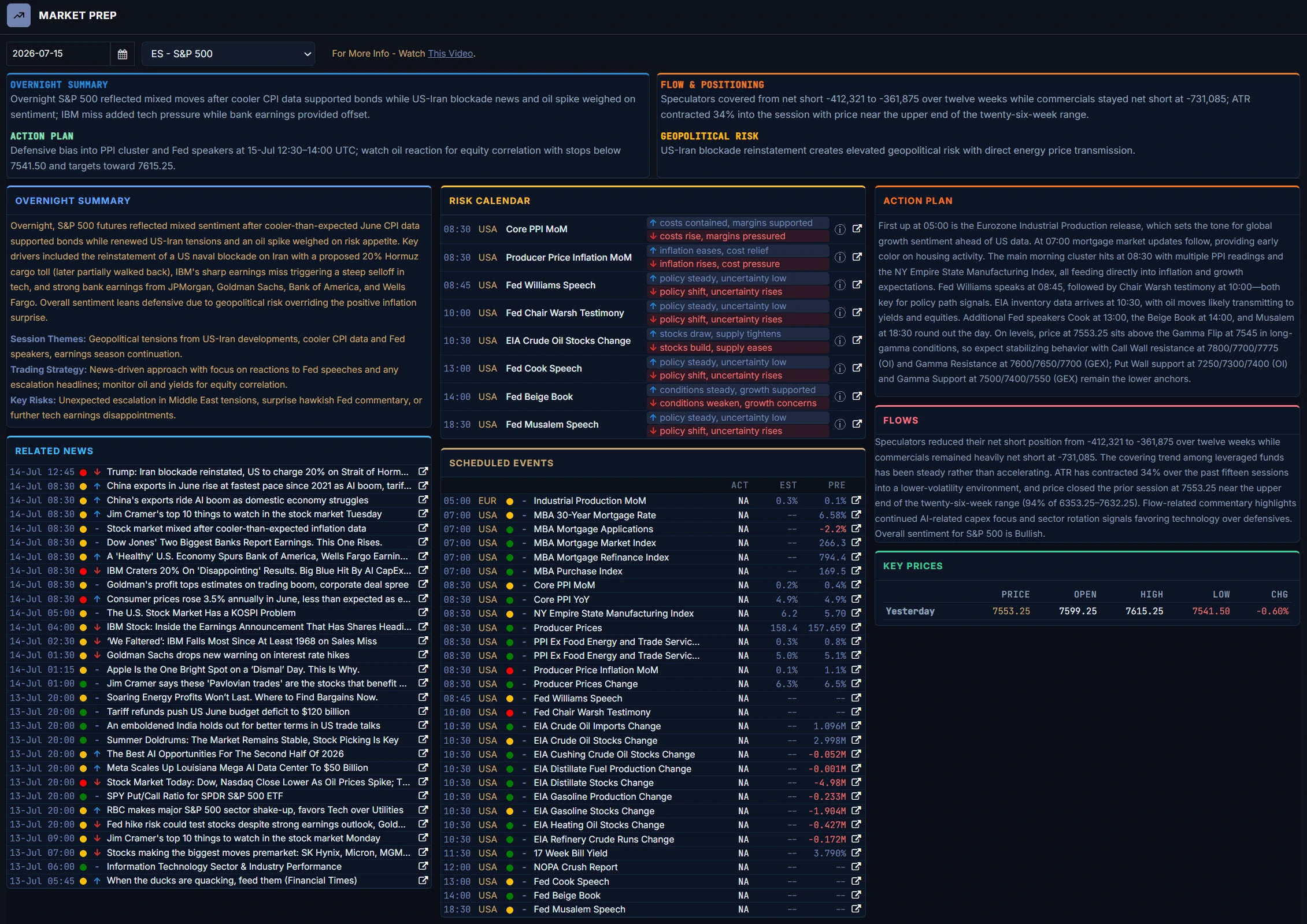
News updates through the day. Economic releases update as the numbers hit. Browser notifications can warn you five minutes before a release, one minute before a release, and when the number comes in.
The benefit is simple: you are less likely to treat a trading day as a series of isolated trades. You can see the sequence, the context and the risk building around you.
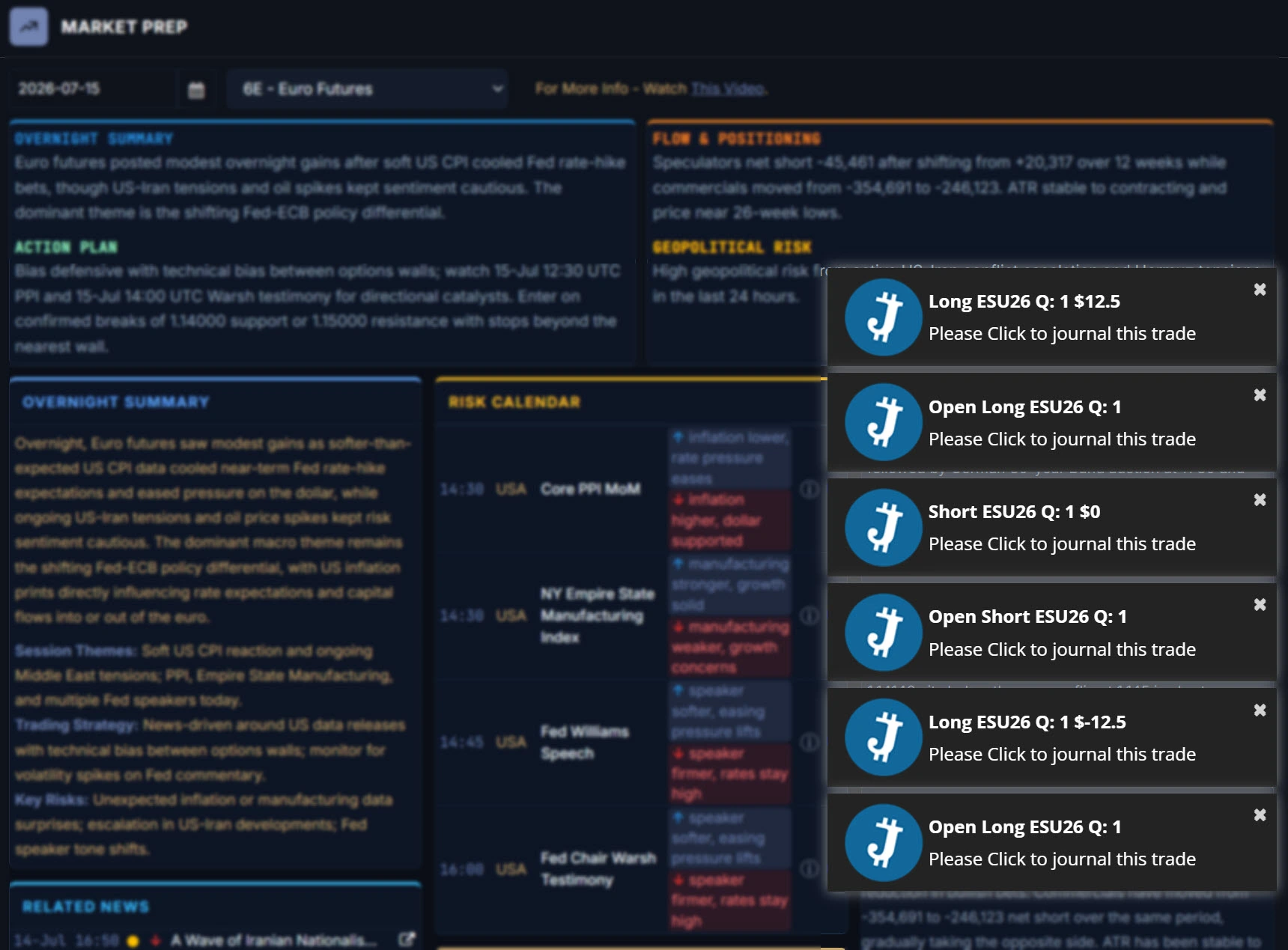
Capture the reason before it disappears
A browser notification can pop up when an order fills, giving you the chance to add a quick note while the reason still exists. You can also journal from Day Overview, My Trades and the Journal Queue.
This is not about writing essays. It is about leaving enough evidence for the review to mean something: the trade type, the reason, the emotional state, the market context, and the behaviour you want to track.
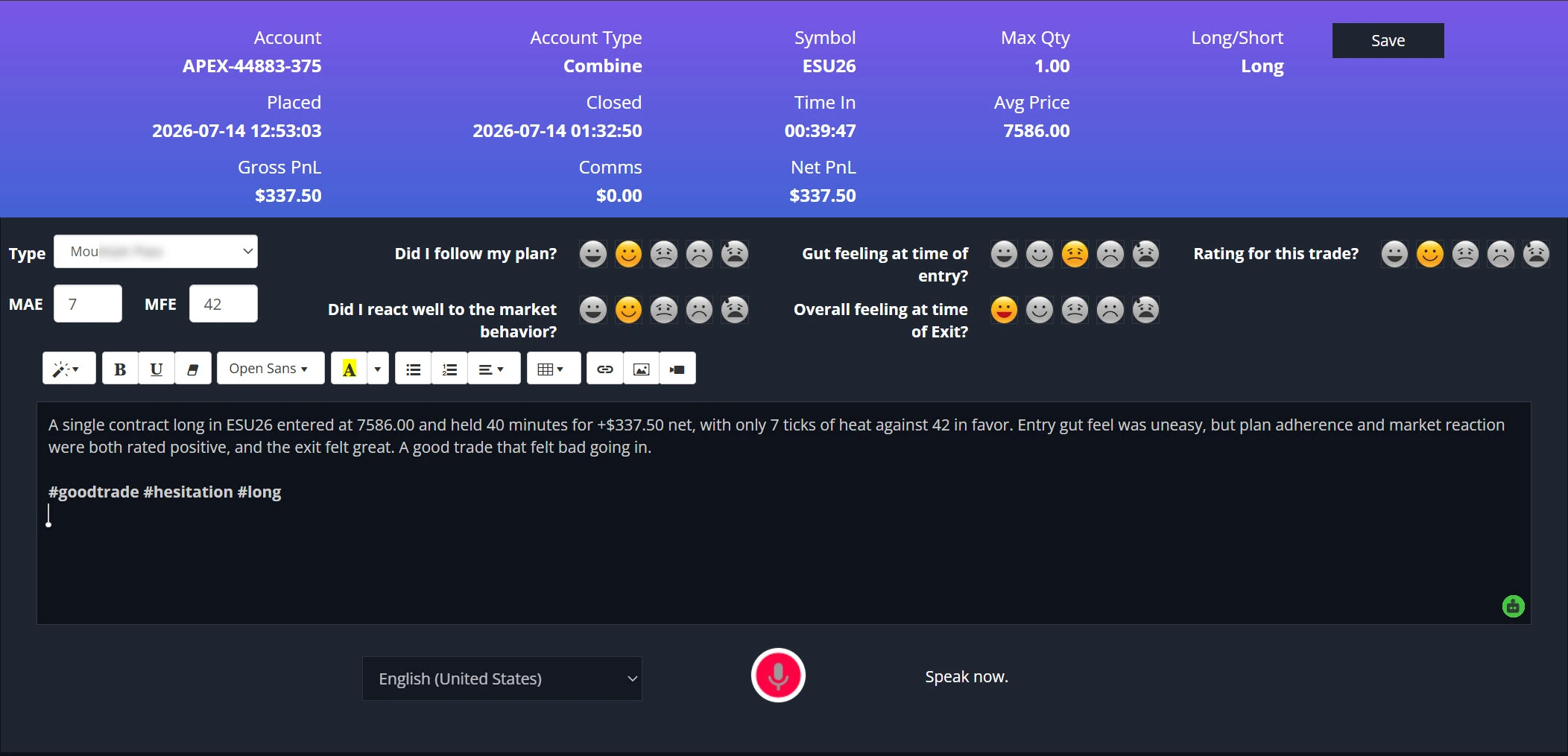
Turn notes into searchable behaviour
That means a trader can tag behaviour naturally - for example hesitation, revenge trade, followed plan, no plan, FOMO, good read, poor execution - then later ask whether those behaviours are actually showing up in the results.
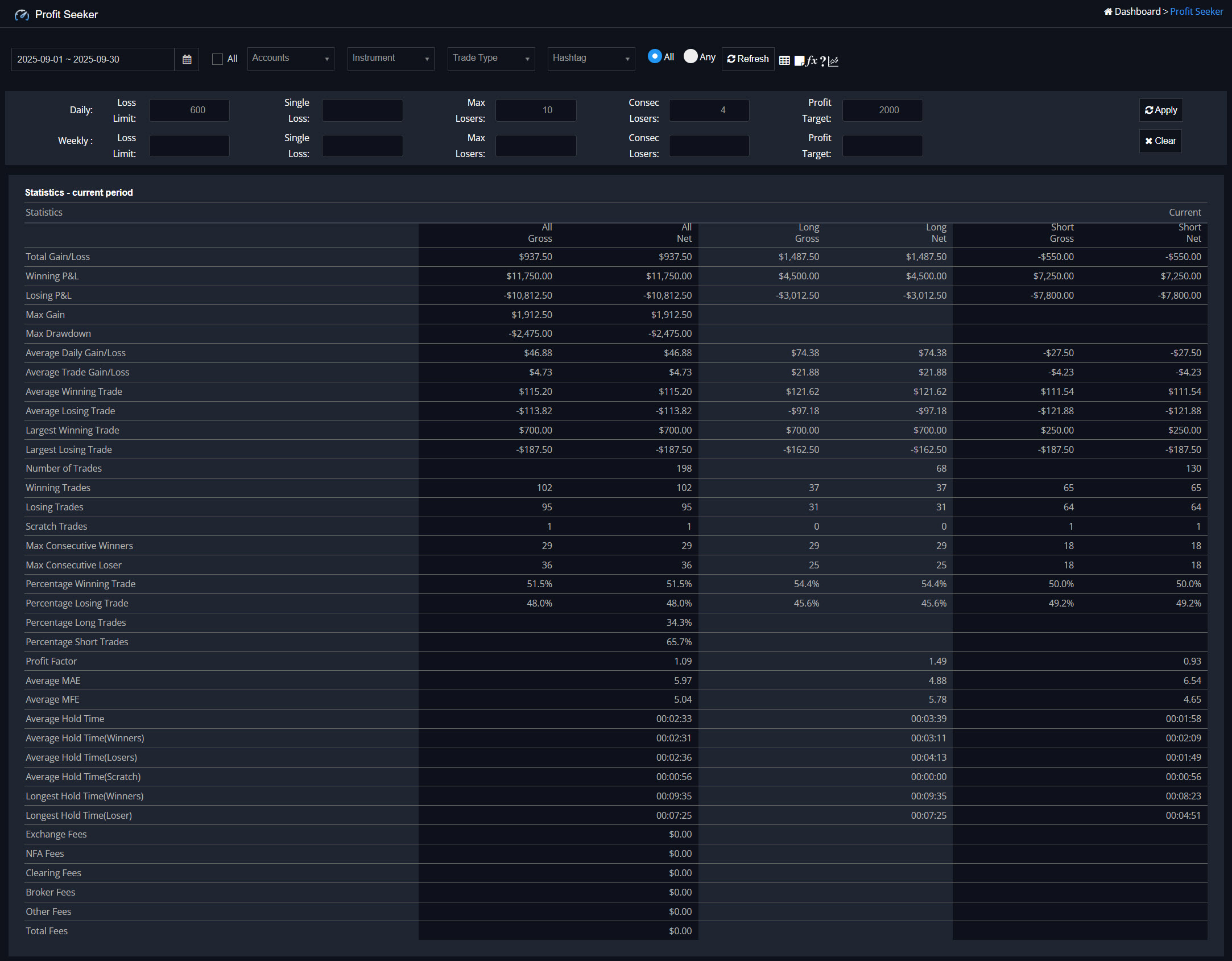
Investigate instead of guessing
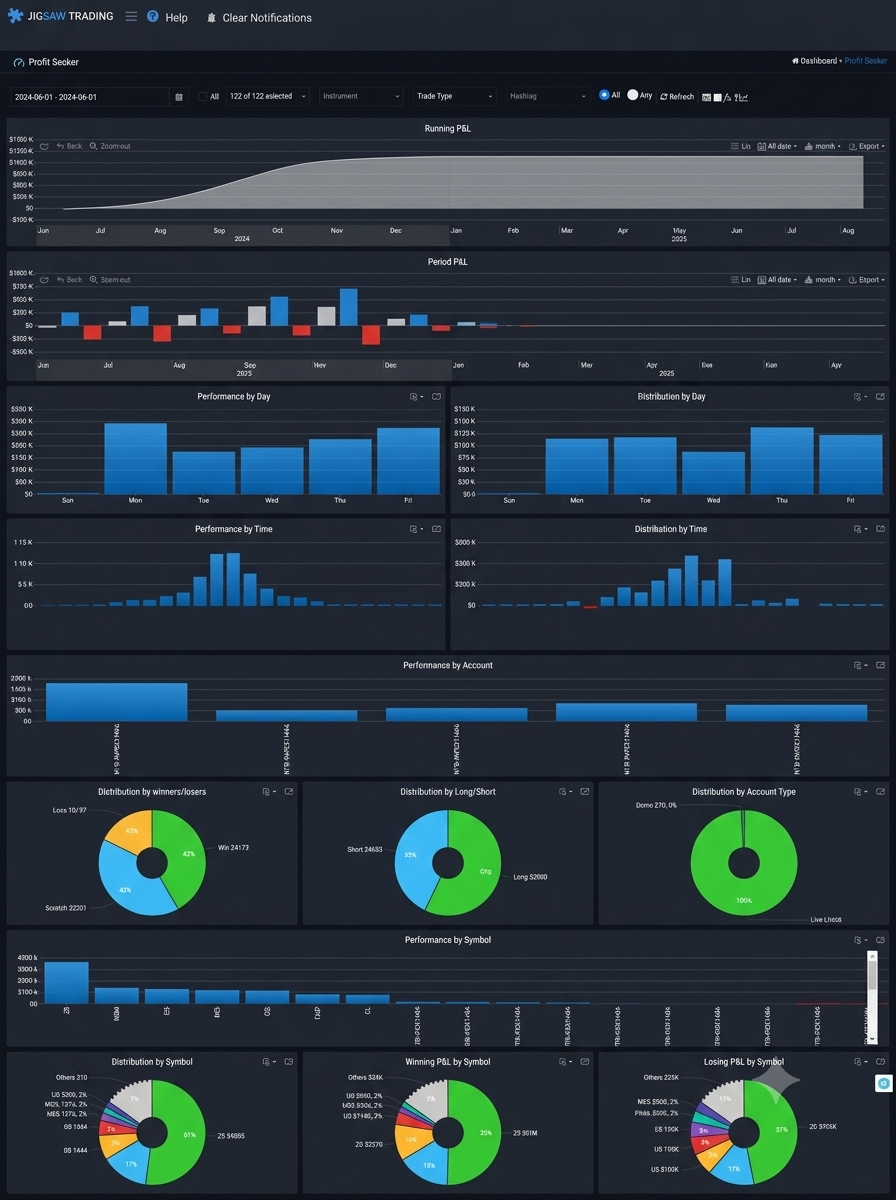
It is not a static report. Click a day, an instrument, a time period, a long/short split, a trade type, an account, a winner/loser group or a chart segment, and the rest of the view updates around that selection. Select two parts of a chart and the entire view changes to those trades.
That turns review into investigation. Instead of saying, “I think I trade badly after lunch,” the trader can test it. Instead of saying, “This setup works,” they can look at the trades. Instead of blaming the market, they can see whether the damage is really coming from timing, size, trade type, behaviour or one recurring mistake.
Test rules before you live by them
“I am stopping after two losers.”
“I need a daily stop.”
“I should stop trading once I hit target.”
“I should stop for the week after a certain drawdown.”
Profit Seeker lets the trader test those ideas against their own history. What if you had stopped after a daily loss limit? What if you stopped after a weekly loss limit? What if you stopped after one large loss, too many losing trades, consecutive losers or a profit target?
The useful question is not “does that rule sound sensible?” The useful question is: would that rule have protected you, or would it also have cut off your best recovery days?
Feed the next plan
That is where Journalytix becomes part of the trading process rather than a post-session admin job.
Active Trader Advanced Analytics /
Turn Results Into Rules You Can Trust
That is what the Active Trader version adds. It turns Journalytix from a record of trades into a full review workflow.
Trade with the day in view
News updates through the day. Economic releases update as the numbers hit. Browser notifications can warn you five minutes before a release, one minute before a release, and when the number comes in.
The benefit is simple: you are less likely to treat a trading day as a series of isolated trades. You can see the sequence, the context and the risk building around you.
Capture the reason before it disappears
A browser notification can pop up when an order fills, giving you the chance to add a quick note while the reason still exists. You can also journal from Day Overview, My Trades and the Journal Queue.
This is not about writing essays. It is about leaving enough evidence for the review to mean something: the trade type, the reason, the emotional state, the market context, and the behaviour you want to track.
Turn notes into searchable behaviour
That means a trader can tag behaviour naturally - for example hesitation, revenge trade, followed plan, no plan, FOMO, good read, poor execution - then later ask whether those behaviours are actually showing up in the results.
Investigate instead of guessing
It is not a static report. Click a day, an instrument, a time period, a long/short split, a trade type, an account, a winner/loser group or a chart segment, and the rest of the view updates around that selection. Select two parts of a chart and the entire view changes to those trades.
That turns review into investigation. Instead of saying, “I think I trade badly after lunch,” the trader can test it. Instead of saying, “This setup works,” they can look at the trades. Instead of blaming the market, they can see whether the damage is really coming from timing, size, trade type, behaviour or one recurring mistake.
Test rules before you live by them
“I am stopping after two losers.”
“I need a daily stop.”
“I should stop trading once I hit target.”
“I should stop for the week after a certain drawdown.”
Profit Seeker lets the trader test those ideas against their own history. What if you had stopped after a daily loss limit? What if you stopped after a weekly loss limit? What if you stopped after one large loss, too many losing trades, consecutive losers or a profit target?
The useful question is not “does that rule sound sensible?” The useful question is: would that rule have protected you, or would it also have cut off your best recovery days?
Feed the next plan
That is where Journalytix becomes part of the trading process rather than a post-session admin job.
Trade With What You Already Use
Our tools connect to the platforms, data feeds and prop firms/brokerages that traders already use.
Trading Platforms
Connect daytradr directly to your existing trading platform.





Data Feeds
Or connect directly to your preferred market data feed (usually from your brokerage).



Exchanges
Access major futures and equities markets worldwide.










Prop Firms
Evaluation or funded account? You're covered.
Prop Firms, Brokerages and Educators
When you are responsible for other traders, a broker statement is not a coaching tool. Screenshots and end-of-day summaries do not tell the whole story either. You need to see what traders are doing, when they are doing it, how risk is building, which groups are improving, and which behaviours keep appearing.
Journalytix can be used as a review and oversight layer for trading teams. Firms and educators can work with trader groups, account assignments, dashboards, leaderboards, journals and risk views, giving managers a clearer way to support trader development.
For prop firms, brokerages and educators, Journalytix is a conversation rather than a checkout button. The right setup depends on the team, the accounts, the data source and the workflow.
FAQs
Is Journalytix sold separately to individual traders?
For individual traders, Journalytix is now part of the daytradr workflow rather than a separate retail product. All daytradr users get the included review layer, and the Active Trader Package includes the full Journalytix workflow.
What do all daytradr users get?
All daytradr users get the basic Journalytix review layer: calendar, trades, dashboard, basic analytics and leaderboard access where applicable. The purpose is to give every user a clean record of what happened.
What does the Active Trader version add?
The Active Trader version adds the full review workflow: Day Overview, market news, economic releases and release notifications, journaling, hashtag-based review, Profit Seeker, what-if rule testing and the planning/review process around the trading day.
Do I need to write long journal entries?
No. The better workflow is short, consistent notes and useful tags. The aim is to capture enough context to make the review useful, not to write an essay after every trade.
Can prop firms, brokerages or educators use Journalytix?
Because live trading needs a proper feedback loop. Market Intelligence helps with preparation, daytradr helps with execution, and Journalytix helps with review and improvement. Together they make the Active Trader Package more than just live order routing.