
Trading Rule #20 – Why Professional Traders Don’t Care About Risk:Reward Ratio
In Trading Rule #17, we discussed adapting your trading to volatility. One of the things we mentioned was adjusting your position size based on volatility.
That doesn’t mean that you have the same stop size and a smaller position – it means a larger stop/target and a smaller position.
There’s an assumption there, that we need to dispel, that your position size is fixed at the time you enter. You’ll see a lot of talk online about risk:reward ratios. I “want to risk 1 to make 3”, which is great but also assumes a somewhat mechanical approach.
These discussions shape your opinion on what trading is. It forces a mindset upon you of “win rate” vs. “risk:reward ratio”. So the fact that many professional traders could not tell you their r:r might come as a shock.
Let’s take an example from a Jigsaw customer I spoke to recently. I won’t tell you his strategy or what he trades, but consider a volatile instrument like Nasdaq and doing this:
- Get into a position with 100-tick stop
- When it goes your way, add more and more contracts
- Scale out as the move comes to an end
It makes sense – you think the market is going one way, you start with 1 lot/$500 risk. As you are proven right, you load up. The size of your winners is larger than the losers, but your risk-reward is a math puzzle, because of a number of factors:
- Each time you add, you pull your average price towards you.
- Your first entry price could be considered the “best” price from a mathematical perspective, but it is based on poor information. The market has not proven your reason for getting into the trade is correct.
- As you add, the price is mathematically worse, but you have superior information. You are paying a premium for information.
So, you need to keep an eye on your average price, your break-even point, so that it’s not too close. That could be measured by volatility (ATRs) or by keeping an eye on structure and not having your average price in a place that is likely to trade through in the natural ebb and flow of a move. Fortunately, most platforms will show your average price, but it’s still an art.
Adding can be done in the following ways:
- Standard Pyramid – Start big, add in smaller increments like 50% initial, then 30%, then 20%. Theoretically the safest but puts more risk up front before your trade has been proven. But this approach does mean the average price stays furthest away than other approaches.
- Equal Block – keep adding in the same increments, 1,1,1,1 etc. This is moderate and ideally you’d trail your stop behind structural levels, so a moderate pullback doesn’t wipe you out.
- Inverted Pyramid – Start small, add larger orders as it moves your way – 1,2,4 etc. This can be quite lethal in the wrong hands without keeping a close eye on order flow and structure.
House Money Myth
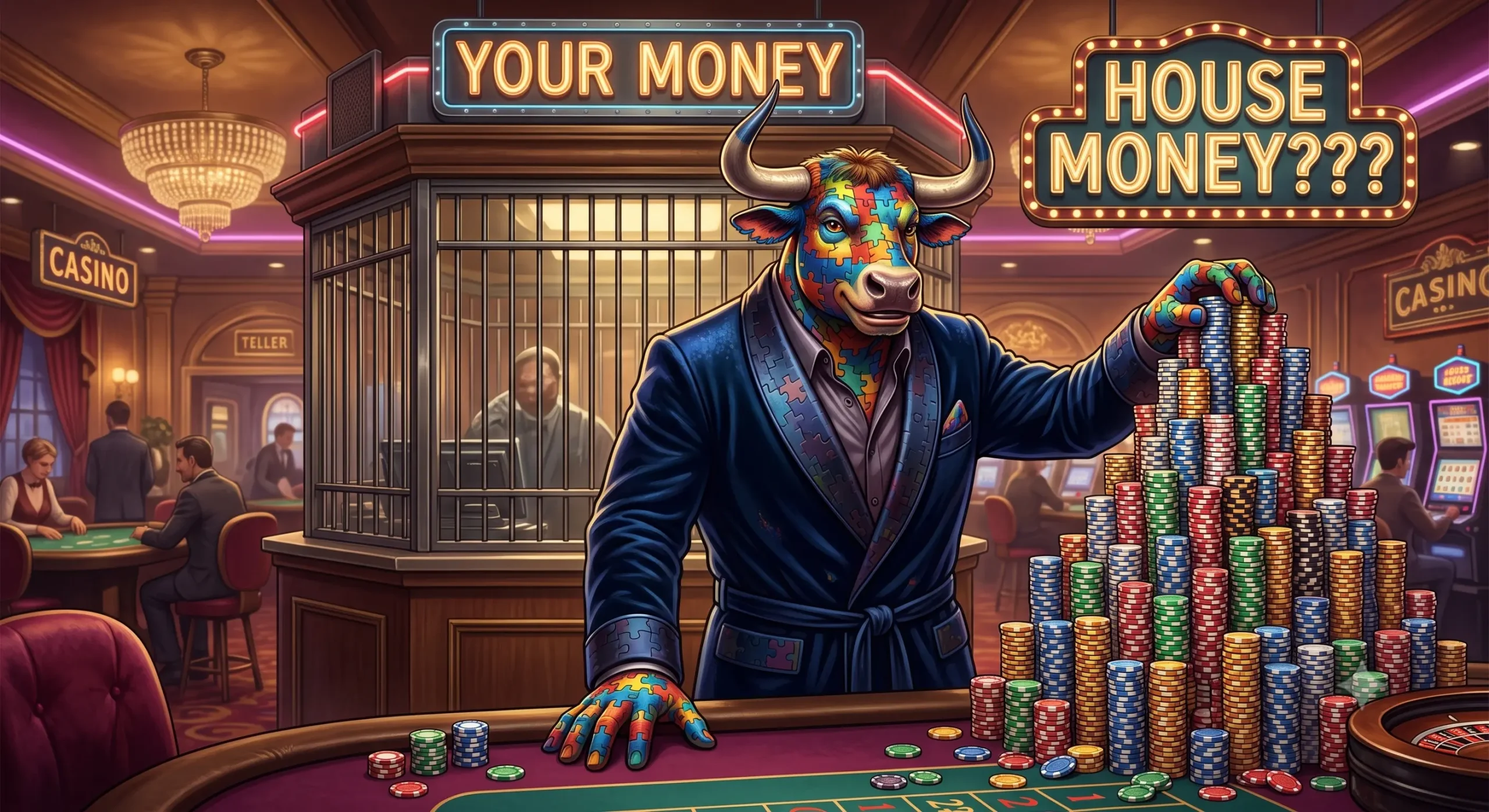
When a pro trading news scales up to 1000 lots, he probably started at 50 lots. As the market moves, they are hammering the bids (or offers) to add size.
There’s a frame of mind you need to be in, in order to execute like this. Many traders don’t see profits as ‘theirs’ until they close the position, so to them it’s ‘house money’ – like chips at a casino you didn’t cash in yet.
The professional trader looks at open PnL as THEIR money. So they might be $10k in profit and now they are thinking “I’m risking $10k of profit to capture a $50k tail-risk event”. Risk:Reward Ratio recalculated on the fly – open profit re-invested.
To scale in, you need eyes on the order flow, looking for that certainty that momentum is not fading. It’s about continually confirming your position with new information and one other thing:
The fact is – your last scale-in will probably be a loser!